Rethinking Research at the 2026 Open Science Retreat
At the beginning of April 2026 a group gathered at The Centre for Alternative Technology in Wales for the 2026 Global Open Science Retreat.
An Open Science Retreat is a somewhat unusual thing; partway between a conference (or rather, an unconference), a hackathon, a retreat, and an activist networking event. The event brought together people from around the world, united by their shared passion for reforming the way that research is done, and that they were in need of some rest.
When thinking about research reform, we often focus on tools (“we just need to get people to use XYZ new tool and that will make everything better!”) while thinking less about the fact that research is done by people. Open Science Retreats focus on the people; both in terms of thinking about how we might be able to reform research by recognising the human element of research (maybe people want to use XYZ new tool, but don’t have the time/support/incentive to do so?) and also by recognising that those pushing for research reform are often doing so alongside an already-demanding role, and often in isolation. These events are an opportunity to take a breath, and connect with the community of people pushing for research reform around the world.
This was the fourth “Global” Open Science Retreat (there have been additional “Local” Open Science Retreats, aimed at communities from a single country or region), but the first in the UK. Previously they’ve been in Germany, the Netherlands, and Switzerland, and at the end of the 2025 event in Switzerland I got stuck on the idea that the time had come for one to happen in the UK. I felt pretty sure that there was both a need and an appetite for an Open Science Retreat here.
We chose to host the event at the Centre for Alternative Technology (CAT) in Machynlleth, Wales. CAT has been an experimental space for several decades, and is well-known for its pioneering and influential exploration of renewable energy technologies such as wind turbines and solar panels. Previously, the site was open to the public as a visitor centre, and welcomed busloads of school children on days out to learn about things like how wind turbines work and how to make really good compost. When I visited the site while trying to work out where to host the event, there was an air of faded theme-park - a mossy solarpunk utopia, and I got the impression of a space which had been successful in provoking the change it was pushing for (as I write, the UK grid is being powered 75% by renewables), and now was in the process of contemplating what to do next.
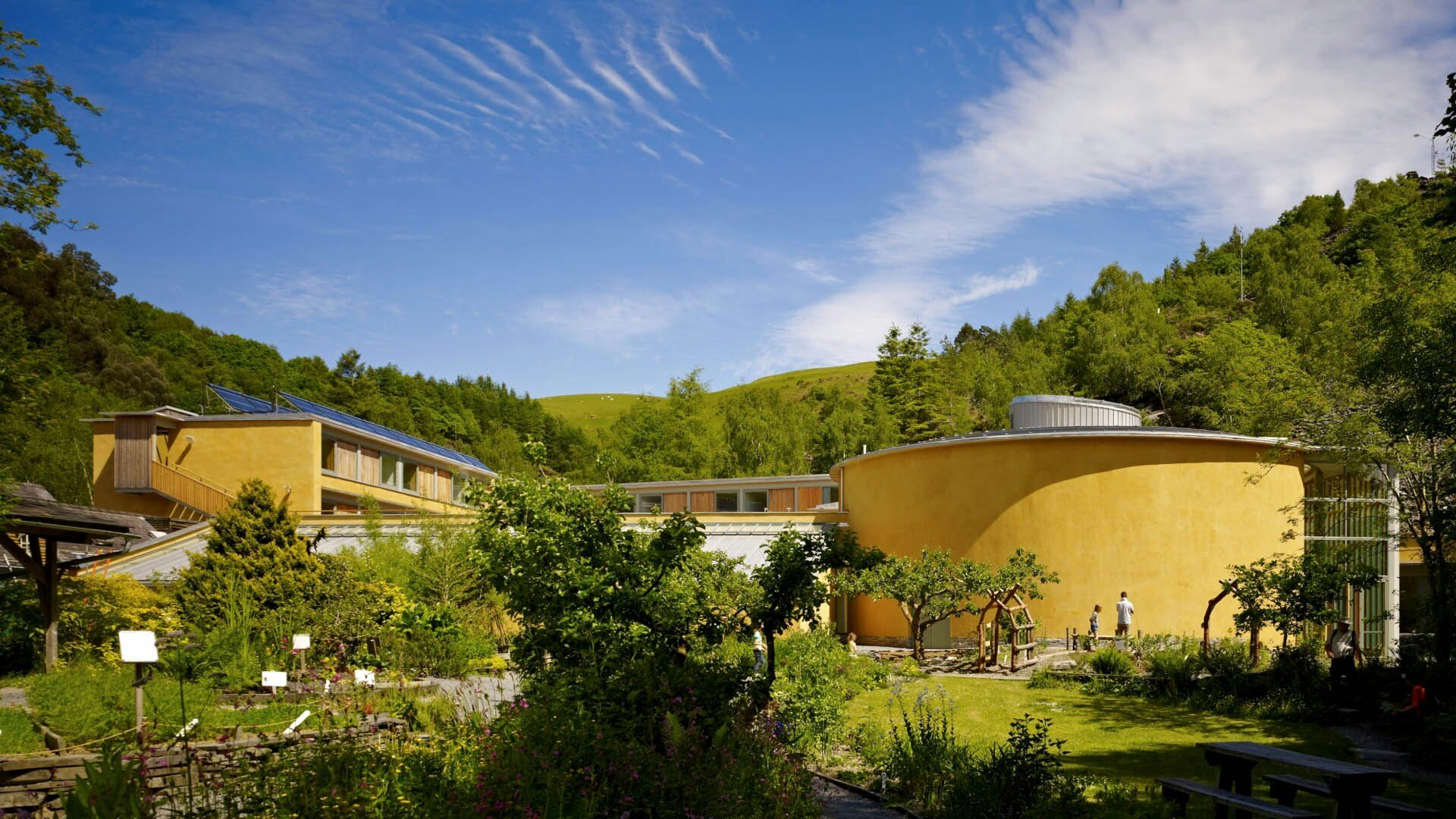
I saw a parallel with the world of Open Science - we’ve come a long way in the last ~15 years (even if it sometimes doesn’t feel like it) - preprints and open-access publishing, data-sharing, and code-sharing (incl. version control) are now fairly common-place, and while there is still a lot of progress to be made, it feels to me like the right time to think about what our next goals are as a community. My hope was that CAT would provide a thought-provoking, inspirational, and calm place to do so. I was not disappointed.
The first element of the event (after the pre-event hackathon organised by UKRN), was an “Unconference Planning Session”. An unconference is like a conference, except the activities and subjects are not decided in advance by an organising committee, but instead are decided by the participants at the start of the event. Participants had been submitting ideas for the previous fortnight, and these were now taped up on walls around the auditorium, for folks invited to mill around and discuss, and ultimately choose which topic group to form/join for the next few days. Choosing which group to join is always challenging for me - there’s more good ideas than there will ever be time for.
For the next few days, the schedule included time to work within people’s chosen topic groups, time for short sessions (“hey I mentioned this thing to someone and they got excited about it, anyone else wanna do an impromptu session on it tomorrow afternoon?”), and some workshops and tours run by CAT (one of my personal highlights was a hike through the history of CAT’s wind turbines, culminating with visiting the community-owned Nordtank turbine), and a morning of presentations on the final day showing the creative ways participants had engaged with topics they were passionate about.
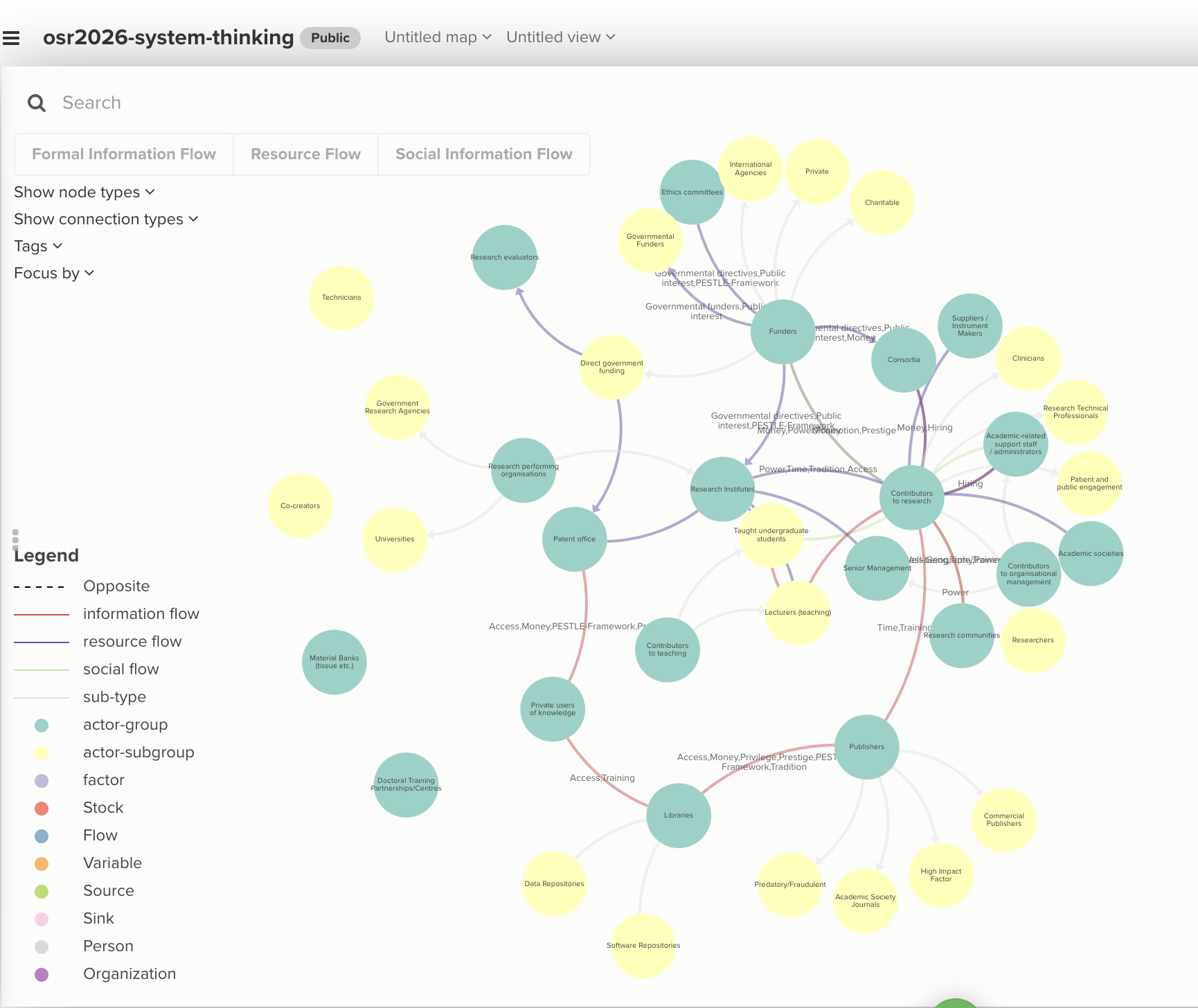
I’ll resist summarising all the presentations (see some links at the end). I’ll pick just two examples: The “Systems Thinking” group presented their work on mapping the open science system, to “better understand how the different components and interconnections are supporting the goal, what blockers are not being well managed, and what leverage points can be targeted for optimisation”.
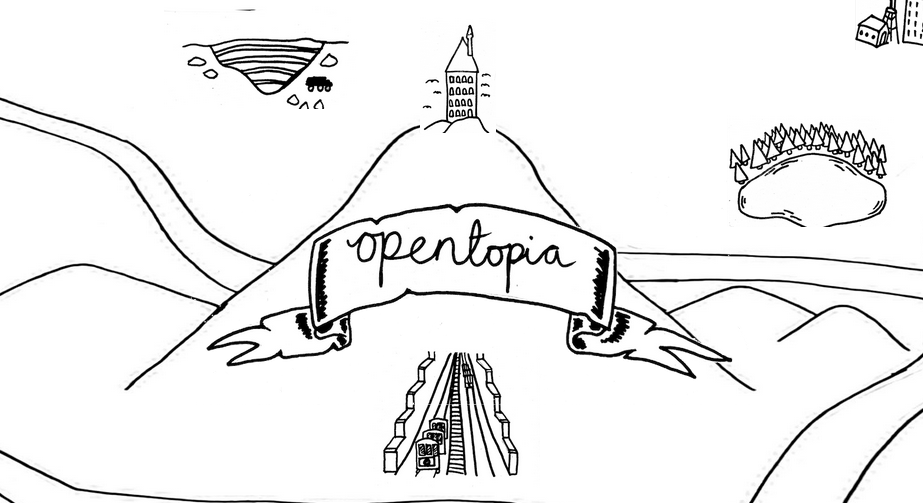
The “Stories” group, meanwhile, made a map of “Open-topia”:
The Open-topia Tourism Board invites you to make your way from Frustration Station, stopping by the Visionary Forest or Open Source Software Marketplace along your way to the Interdisciplinary Inn to chat with colleagues. Whilst you’re here, stay for the FAIR or catch a show at the Storytelling Theatre. Beware of Burn-out Volcano and the Job Precarity Dragon! We hope to see you soon!
With the event now over, we organisers are taking some time to rest and reflect, and slowly beginning to think about next year’s event. We don’t have many details yet to share about next year, but what we do know is that we will, again, be prioritising making room for spontaneity, rest, and thinking about what we all need to do next.
To see some of the things people made at the 2026 Global Open Science Retreat, see our collection on Research Equals. To read more about Open Science Retreats visit https://open.science-retreat.org/.
The event was co-organised by the Digital Research Academy, UKRN, and OLS. Thank you to Research Equals, Society of Research Software Engineering, COS, SSI, UKRN, and CAKE for financial support.